
Jeju Hirasuzuki Fishing Guide: Blackfin Seabass in Korea
After our previous Singapore bubu fish trap fishing trip with Jeff Tsen, several fishing kakis asked if they could experience it for themselves.
We invited some newcomers to join us on several trips to learn more about this traditional method of bubu fishing in Singapore.
Not every trip produced a spectacular catch, but the traps still yielded an interesting variety of fish. Like conventional rod-and-line fishing, bubu fishing is affected by location, tide, weather, bait movement and luck.
A bubu is a traditional fish trap placed on the seabed. Fish enter through a funnel-shaped opening and may have difficulty finding their way out.
Unlike rod-and-line fishing, the trap is left in the water before being retrieved later. The anticipation comes when the crew reaches the location, secures the line and begins pulling the bubu towards the surface.
Captain Jeff is passionate about introducing newcomers to traditional bubu fishing. The trip is not only about collecting fish. Participants can learn how the traps work, how they are retrieved and how different species are identified.
Pulling a bubu can also be physically demanding, especially when the trap is heavy or affected by the current. The best moment is when the trap finally breaks the surface and everyone tries to see what is inside.
Our January bubu fishing trip produced a good selection of fish. As always, the actual catch depended on which fish happened to enter the traps before they were retrieved.

|
| Our January bubu fishing catch with Captain Jeff. |
The December trip was another opportunity for the kakis to experience pulling fish traps in Singapore waters. Catch quantities and species can vary considerably between individual traps.

|
| The catch from our December bubu fishing trip. |
One of the trips did not produce a huge catch, but it still produced. That uncertainty is part of the experience. No fishing method can guarantee what will be caught on a particular day.
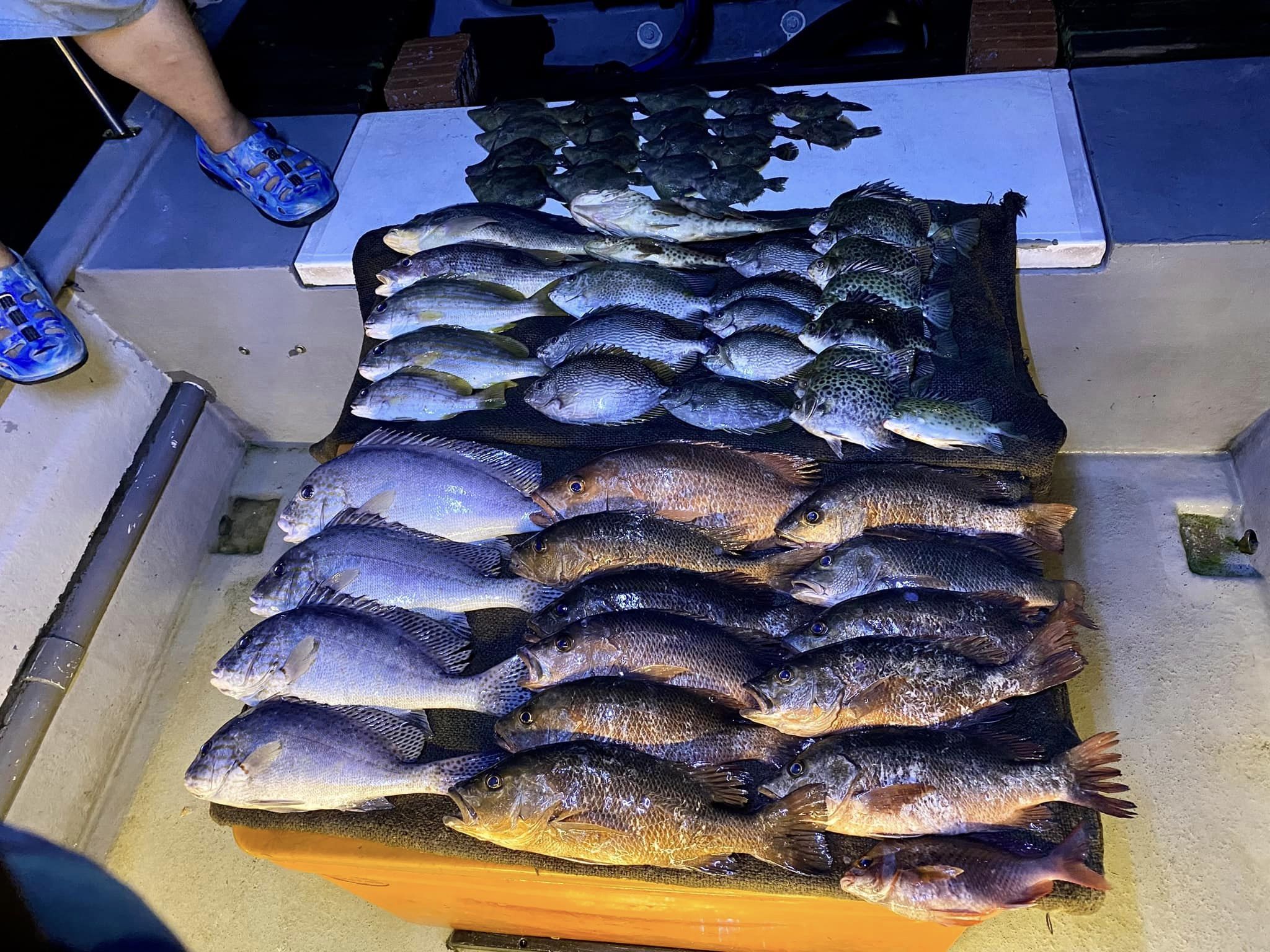
|
| Our February bubu fishing trip with Jeff Tsen. |
Responsible harvesting is an important part of any fishing activity. When sorting the catch, we try to release juvenile fish where practical and retain only what can be used.
It is also important to identify the species correctly. Some fish remain relatively small even when mature, so size alone does not always indicate whether a fish is juvenile.
Basic responsible practices include:
The video below shows the bubu fishing experience with Captain Jeff, including the traditional process of retrieving the traps and sorting the catch:
Watch our traditional bubu fishing trip with Jeff Tsen on TikTok
Yes, beginners can participate when accompanied by an experienced operator who can explain the equipment, retrieval process, fish identification and safety considerations.
Participants should be prepared to help pull the traps, sort the catch and listen carefully to the captain’s instructions. As the boat will be operating at sea, suitable clothing and sun protection are also recommended.
If you would like to try bubu fish trap fishing in Singapore, email Baktao through the blog contact details. Subject to availability, I may be able to help arrange a trip with Jeff.
Before booking, confirm the following:
Bubu fishing offers a very different experience from conventional rod-and-line fishing. There is no lure to cast and no bite to feel. Instead, the excitement comes from pulling each trap and discovering what has entered it.
The trips also provide an opportunity to learn about local fish species and a traditional fishing method that may become less common in the future.
Catch quantities are never guaranteed, but that uncertainty is part of what makes every bubu fishing trip interesting.
Tight lines and stay hooked on Baktao!


Comments